


Overview
Tinnitus (TIN-ih-tus or tih-NIE-tus) is when you experience ringing or other noises in one or both of your ears. The noise you hear when you have tinnitus isn't caused by a sound that comes from outside your ear. Usually, other people can't hear the sound. Tinnitus is common. It affects about 15% to 30% of people and is more common in older adults.
Tinnitus is usually caused by another condition, such as age-related hearing loss, an ear injury or an issue with the blood vessels. For many people, tinnitus gets better after treating the condition that is causing it. There are also treatments that lessen or mask the noise, making tinnitus less noticeable.
Symptoms
Symptoms of tinnitus vary. Most people with tinnitus describe hearing a ringing in the ears, even though no one else can hear the ringing sound. The noises of tinnitus may vary in pitch from a low roar to a high squeal. People can have tinnitus in one or both ears. In some cases, the sounds can be so loud that they make it hard to focus or hear other sounds. Tinnitus may be present all the time, or it may come and go.
Some of the types of sounds people with tinnitus report hearing are:
- Ringing.
- Buzzing.
- Roaring.
- Clicking.
- Hissing.
- Humming.
- Whooshing.
- Pulsing like the sound of a heartbeat.
There are two main types of tinnitus. These are:
- Subjective tinnitus. In this more common type of tinnitus, only you can hear the noises.
- Objective tinnitus. In this less common type of tinnitus, a healthcare professional also can hear sounds from the head, neck or ear during an exam. Objective tinnitus often has a specific cause that can be treated.
When to see a doctor
Some people aren't very bothered by tinnitus. For other people, tinnitus disrupts their daily lives. If you have tinnitus that bothers you, see your healthcare professional.
Make an appointment to see your healthcare professional if:
- Your tinnitus starts after an upper respiratory infection, such as a cold, and doesn't go away within a week.
See your healthcare professional as soon as possible if:
- You have sudden hearing loss, dizziness, numbness, or weakness in the face, arm or leg with the tinnitus.
- Your tinnitus is making you feel anxious or depressed or disrupts your sleep.
- You develop tinnitus after being in a car accident, getting hurt playing sports or in a similar event. In these cases, seek emergency medical care.
Causes
Tinnitus is a symptom of more than 200 different health conditions, not a disease itself. These other health conditions can cause or worsen tinnitus. In many cases, healthcare professionals can't find an exact cause.
Common causes of tinnitus
The most common causes of tinnitus can be broken down into four different types. These are:
-
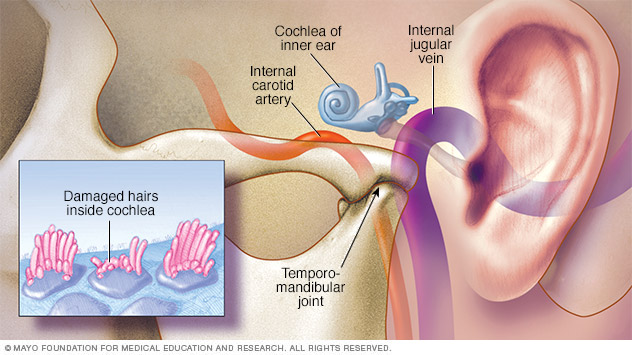
Conditions related to hearing loss. There are small, fragile hair cells in the inner ear, called the cochlea, that move when sound waves enter the ear. This movement triggers electrical signals along the nerve from the ear to the brain, called the auditory nerve. The brain interprets these signals as sound.
Age or regular exposure to loud sounds can bend or break the hairs inside the inner ear. Once bent or broken, they can then "leak" random electrical impulses to the brain, causing tinnitus. About 9 of 10 people with tinnitus have some hearing loss caused by noise.
-
Medicines harmful to the ear. Some medicines may cause or worsen tinnitus. Generally, the higher the dose of these medicines, the worse tinnitus becomes. Usually medicines will cause tinnitus in both ears. Often the unwanted noise goes away when you stop using these medicines.
Medicines and substances known to cause or worsen tinnitus include:
- Nonsteroidal anti-inflammatory drugs (NSAIDs).
- Some antibiotics.
- Cancer medicines.
- Water pills, called diuretics.
- Medicines used to treat malaria.
- Some antidepressants.
- Marijuana.
- Tobacco.
- Some herbal supplements.
-
Conditions related to ear structure and function. Some examples of these types of conditions include:
- Ear infections. These are infections typically caused by bacteria or viruses that infect the middle ear, often following a cold, flu or allergies.
- Ear canal blockage. A blockage of wax, dirt or other foreign materials can change the pressure in the ear, causing tinnitus.
- Problems with the eustachian tube. The eustachian (u-STAY-shun) tube connects the middle of the ear to the back of the throat. Sometimes losing large amounts of body weight or having radiation treatment near the nose and throat can cause the eustachian tube to not work correctly.
- Conditions that affect the temporomandibular joint (TMJ). There is a temporomandibular (tem-puh-roe-man-DIB-u-lur) joint on both sides of the head in front of the ears, where the lower jawbone meets the skull. Issues with the TMJ can cause tinnitus.
- Changes to ear bones. Stiffening of the bones in the middle ear, called otosclerosis, may affect hearing and cause tinnitus, either in one or both ears. This condition, caused by unusual bone growth, tends to run in families.
- Muscle spasms in the inner ear. Muscles in the inner ear can tense up or spasm, sometimes causing tinnitus, hearing loss and a feeling of fullness in the ear. This sometimes happens for no clear reason, but it can be caused by brain and nervous system diseases such as multiple sclerosis.
-
Conditions related to blood vessels. Blood flow changes can cause tinnitus or make it louder. One type of tinnitus, called pulsatile tinnitus, is usually caused by conditions related to blood vessels, also called vascular conditions.
Some of the vascular conditions that can lead to or affect tinnitus are the buildup of fats, cholesterol and other substances in artery walls, called atherosclerosis, high blood pressure, and kinked or malformed blood vessels.
Other causes of tinnitus
Less common causes of tinnitus include other ear conditions, chronic health conditions, and injuries or conditions that affect the nerves in your ear or the hearing center in your brain.
- Meniere's disease. Tinnitus can be an early sign of Meniere's disease, an inner ear condition that may be caused by inner ear fluid pressure.
- Head or neck injuries. Head or neck trauma can affect the inner ear, hearing nerves or brain function linked to hearing. Such injuries usually cause tinnitus in only one ear.
- Migraines. A type of migraine headache called vestibular migraine, can cause dizziness, a loss of balance called vertigo, and tinnitus.
- Acoustic neuroma or other head and neck tumors. Acoustic neuroma is a noncancerous, also called benign, tumor. It grows on the cranial nerve that runs from the brain to the inner ear and affects balance and hearing. Other head, neck or brain tumors also can cause tinnitus.
- Other chronic conditions. Conditions such as diabetes, thyroid conditions, migraines, anemia, and autoimmune conditions such as rheumatoid arthritis and lupus have all been connected with tinnitus.
Risk factors
Anyone can have tinnitus, but these factors may raise your risk:
- Loud noise exposure. Loud noises, such as those from heavy equipment, chain saws and firearms, and loud music all cause noise-related hearing loss. People who work in noisy places, such as factory and construction workers, musicians, and soldiers, are especially at risk.
- Age. As you age, the nerve fibers in your ears don't work as well, possibly causing the hearing issues related to tinnitus.
- Sex. Men are more likely to have tinnitus.
- Tobacco and alcohol use. People who smoke tobacco or use marijuana and other substances are more likely to have tinnitus. Drinking alcohol also raises the risk of tinnitus.
- Certain health conditions. Obesity, heart disease, high blood pressure, and a history of depression, anxiety, arthritis or head injury all raise your risk of tinnitus.
Complications
Tinnitus affects people differently. For some people, tinnitus has a big impact on their quality of life. If you have tinnitus, you also may have:
- Fatigue.
- Stress.
- Sleep difficulties.
- Trouble focusing.
- Memory issues.
- Depression.
- Anxiety and irritability.
- Headaches.
- Problems with work and family life.
Treating these linked conditions may not affect tinnitus directly, but it can help you feel better.
Prevention
In many cases, tinnitus is caused by something that can't be prevented. But some precautions can help prevent certain kinds of tinnitus.
- Use hearing protection. Over time, exposure to loud sounds can damage the nerves in the ears, causing hearing loss and tinnitus. Many strategies can protect your hearing. For example, try to limit your exposure to loud sounds. If you can't avoid loud sounds, always wear over-the-ear hearing protection, especially if you use chain saws, are a musician, work in an industry that uses loud machinery, or use firearms such as pistols or shotguns.
- Turn down the volume. Long-term exposure to amplified music with no ear protection or listening to music at very high volume through headphones can cause hearing loss and tinnitus.
- Take care of your heart health. Regular exercise, eating right and taking other steps to keep your blood vessels healthy can help prevent tinnitus linked to obesity and blood vessel conditions.
- Limit alcohol, caffeine and nicotine. These substances, especially when used in excess, can affect blood flow and worsen tinnitus.
Diagnosis
Your healthcare professional will typically diagnose you with tinnitus based on your symptoms alone. But to treat your symptoms, your health professional will try to find whether your tinnitus is caused by another condition. Sometimes a cause can't be found.
To help find the cause of your tinnitus, your healthcare professional will likely ask you about your medical history and check your ears, head and neck. Common tests include:
- Hearing or audiological exam. During the test, you'll sit in a soundproof room wearing earphones that send specific sounds into one ear at a time. You'll show when you can hear the sound, and your results will be compared with results considered typical for your age. This can help rule out or find possible causes of tinnitus.
- Movement. Your healthcare professional may ask you to move your eyes, clench your jaw, or move your neck, arms and legs. If your tinnitus changes or worsens, it may help find another condition that needs treatment.
- Imaging tests. Depending on the suspected cause of your tinnitus, you may need imaging tests such as CT or MRI scans. A computerized tomography (CT) scan is a type of imaging that uses X-ray techniques to make more detailed images of the body. Magnetic resonance imaging (MRI) is a medical imaging technique that uses a magnetic field and computer-generated radio waves to make detailed 3D images of the organs and tissues in the body.
- Lab tests. Your health professional may draw blood to check for anemia, thyroid conditions, heart disease or vitamins that the body does not have enough of.
Do your best to describe for your healthcare professional what kind of tinnitus noises you hear. The sounds you hear can help your healthcare professional find a possible cause.
- Clicking. This type of sound suggests that muscle contractions in and around your ear might be the cause of your tinnitus.
- Pulsing, rushing or humming. These sounds usually stem from blood vessel causes, also known as vascular conditions, such as high blood pressure. You may notice the sounds when you exercise or change positions, such as when you lie down or stand up.
- Low-pitched ringing. This type of sound may point to ear canal blockages, Meniere's disease or stiff inner ear bones, called otosclerosis.
- High-pitched ringing. This is the most common tinnitus sound. Likely causes include loud noise exposure, hearing loss or medicines. Acoustic neuroma can cause continuous, high-pitched ringing in one ear.
Treatment
Treatment for tinnitus depends on whether the cause of your tinnitus is another health condition. If so, your healthcare professional may be able to reduce your tinnitus symptoms by treating the other condition. Examples include:
- Earwax removal. Your healthcare professional can take excess wax out of the ear using a small, curved tool called a curet or by using suction techniques. A health professional also can flush out the wax using a syringe filled with warm water. Removing earwax can improve tinnitus symptoms.
- Treating a blood vessel condition. Blood vessel conditions may need medicine, surgery or another treatment to address the issue. For example, your healthcare professional may prescribe a blood pressure medicine to help lower your blood pressure and lessen tinnitus symptoms.
- Hearing aids. If your tinnitus is caused by noise-induced or age-related hearing loss, using hearing aids may improve your symptoms.
- Changing your medicine. If a medicine you're taking appears to be the cause of tinnitus, your healthcare professional may recommend stopping the medicine, lowering the dose or switching to a different medicine.
Noise suppression
Many times, tinnitus can't be cured. But there are treatments that can help make your symptoms less noticeable. Your healthcare professional may suggest using an electronic device to muffle or mask the noise. These devices include:
- White noise machines. These devices, which make a sound similar to static or environmental sounds such as falling rain or ocean waves, are often an effective treatment for tinnitus. You may want to try a white noise machine with pillow speakers to help you sleep. Fans, humidifiers, dehumidifiers and air conditioners in the bedroom also make white noise and may help make tinnitus less bothersome at night.
- Masking devices. Worn in the ear and similar to hearing aids, these devices are tuned by a person trained in hearing conditions. The devices make a continuous, low-level white noise that suppresses tinnitus symptoms.
Counseling
Behavioral treatment approaches aim to help you live with tinnitus by helping you change the way you think and feel about your symptoms. Over time, your tinnitus may bother you less. Types of counseling include:
- Tinnitus retraining therapy (TRT). This is a program designed just for you and your symptoms. A person specializing in treating hearing conditions, called an audiologist, may help you complete TRT, or you can receive therapy at a tinnitus treatment center. TRT combines sound masking and counseling from a trained professional. Typically, you wear a device in your ear that helps mask your tinnitus symptoms while you also get directive counseling. Over time, this treatment may help you notice tinnitus less and be less bothered by your symptoms.
- Cognitive behavioral therapy (CBT) or other forms of counseling. A licensed mental health professional or psychologist can help you learn coping techniques to make tinnitus symptoms less bothersome. Counseling also can help with other conditions often linked to tinnitus, such as anxiety and depression. Many mental health professionals offer CBT for tinnitus in individual or group sessions. Some programs also are offered online.
Medicines
Medicines can't cure tinnitus, but in some cases they may help reduce symptoms or complications. Still, medicines play only a small role in treating tinnitus. Many care guidelines advise against using medicines or alternative therapies to treat tinnitus. Your healthcare professional may prescribe medicine to treat another condition to help relieve your symptoms. Or you may receive medicines to help treat anxiety, depression and insomnia that many people with tinnitus have.
Potential future treatments
Researchers are studying new technologies and treatments to improve options for people with tinnitus. Some of these new approaches are:
- New masking devices using technology like that in noise-canceling headphones.
- Magnetic or electrical stimulation of the brain or the part of the inner ear called the cochlea. Techniques include transcranial magnetic stimulation and deep brain stimulation.
- Cochlear implant surgery has been shown to help some people with tinnitus and severe hearing loss.
- New medicines for the ear. Injecting medicines directly into the ear may help people with tinnitus who have sudden hearing loss, autoimmune inner ear disease or Meniere's disease.
Lifestyle and home remedies
Sometimes treatments for tinnitus don't work well or several treatments are needed. Sometimes people get used to tinnitus. For many people, making some lifestyle changes helps to make tinnitus symptoms less bothersome. These tips may help:
- Use hearing protection. Over time, exposure to loud sounds damages the nerves in the ears, causing hearing loss and tinnitus. To keep your tinnitus from getting worse, take steps to protect your hearing. If you use chain saws, are a musician, work in an industry that uses loud machinery, or use firearms such as pistols or shotguns, always wear over-the-ear hearing protection.
- Turn down the volume. Listening to music at very high volume through headphones can cause hearing loss and tinnitus.
- Use white noise. If tinnitus is worse in quiet settings, try using a white noise machine to mask the noise from tinnitus. If you don't have a white noise machine, a fan, soft music or low-volume radio static may help.
- Limit alcohol, caffeine and nicotine. These substances, especially when used in excess, can affect blood flow and worsen tinnitus.
Alternative medicine
There's little evidence that alternative medicine treatments work for tinnitus. Some alternative therapies that have been tried for tinnitus include:
- Acupuncture.
- Ginkgo biloba.
- Melatonin.
- Zinc supplements.
Coping and support
Besides any treatment options your healthcare professional offers, here are some suggestions to help you cope with tinnitus:
- Support groups. Sharing your experience with others who have tinnitus may be helpful. There are tinnitus groups that meet in person as well as internet forums. To make sure that the information you get in the group is correct, it's best to choose a group led by a doctor, audiologist or other qualified health professional.
- Education. Learning as much as you can about tinnitus and ways to ease symptoms can help. And understanding tinnitus better makes it less bothersome for some people.
- Stress management. Stress can make tinnitus worse. Stress management, whether through relaxation therapy, biofeedback or exercise, may give you some relief.
Preparing for an appointment
Be prepared to tell your healthcare professional about:
- Your signs and symptoms.
- Your medical history, including any other health conditions you have, such as hearing loss, high blood pressure or clogged arteries, called atherosclerosis.
- All medicines you take, including herbal remedies.
What to expect from your healthcare professional
Your healthcare professional is likely to ask you many questions, including:
- When did you begin experiencing symptoms?
- What does the noise you hear sound like?
- Do you hear it in one or both ears?
- Has the sound you hear been continuous, or does it come and go?
- How loud is the noise?
- How much does the noise bother you?
- What, if anything, seems to improve your symptoms?
- What, if anything, appears to worsen your symptoms?
- Have you been exposed to loud noises?
- Have you had an ear disease or head injury?
After you've been diagnosed with tinnitus, you may need to see an ear, nose and throat specialist called an otolaryngologist. You also may need to work with a hearing expert, also known as an audiologist.
© 1998-2026 Mayo Foundation for Medical Education and Research (MFMER). All rights reserved. Terms of Use